
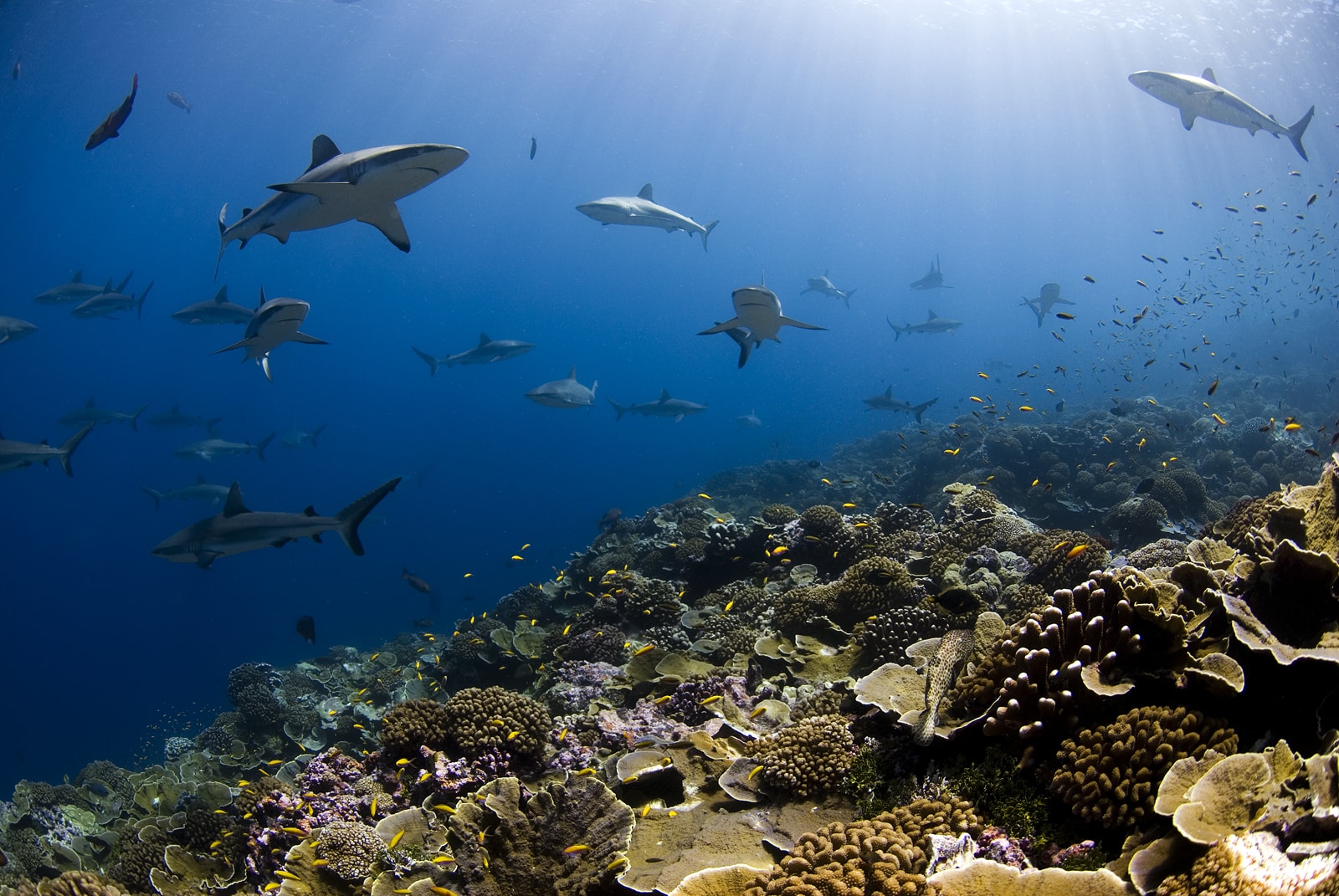
We often reference the importance of marine animals when we work towards their protection. We say we need sharks, yet we rarely paint the full picture of their importance. Imagine a marine food web as a tightly woven net. Every strand represents a species which helps hold the shape of the whole. Pull one strand and the net doesn’t just lose a thread, it unravels—no longer able to hold the weight of its contents. This is the basic idea behind ecosystem balance, the health of a habitat depends not just on the presence of individuals, but on the relationships between them.
What Is Ecology?
Ecology is the study of these relationships between organisms and their environment. Ecology explains how living things interact with each other, with their physical surroundings, and with the flows of energy and matter that connect them.
A central principle of ecology is that every species, regardless of its size or how “important” it looks to a human observer, contributes to ecosystem function. A tiny grazing fish, a bed of algae, and a massive predator are all playing roles in the same food web (the network of feeding relationships that link them together), and removing any one of them changes the conditions for everyone else. Ecologists call these rippling effects trophic cascades, chains of impact that move up or down a food web after a change at one level. To understand why sharks are so important, we first need to understand what sharks actually are.
Shark Biology
Chondrichthyes: The Cartilaginous Fishes
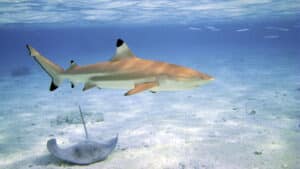 Sharks belong to the class Chondrichthyes, a name that roughly translates to “cartilage fish.” Unlike the bony fishes that make up the vast majority of fish species, chondrichthyans have skeletons built from cartilage, the same lightweight tissue that forms human ears and noses. This lighter skeleton, along with oil-rich livers, helps many sharks maintain buoyancy without the swim bladders that bony fish rely on.
Chondrichthyes includes four major groups:
- Sharks
- Rays
- Skates
- Chimaeras (sometimes called “ghost sharks”)
Together, these represent one of the oldest surviving vertebrate lineages on Earth, with a fossil record stretching back hundreds of millions of years. Chondrichthyans predate trees by tens of millions of years, and outlasted the dinosaurs entirely.
Diversity
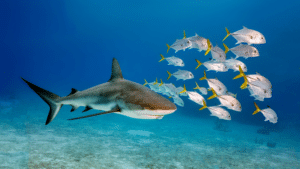 Sharks alone are remarkably diverse. Of the roughly 1,290 described chondrichthyan species–sharks, rays, skates and chimaeras combined–sharks alone account for somewhere in the range of 500 to 540 described species, with new species still being described nearly every year; many of them small, deep-water sharks discovered through submersible surveys and genetic analysis (IUCN Shark Specialist Group).
That diversity spans an enormous range of sizes and lifestyles. Take, for example, Whale Sharks, which are the largest fish in the ocean and can grow longer than a school bus and feed by filtering plankton from the water, compared to Dwarf Lanternsharks, which are among the smallest sharks known and can fit in a human hand.
Sharks as Ecosystem Engineers
Not all sharks play the same ecological role, and the effects of any given species vary substantially between locations. Many large shark species function as apex predators. These are the organisms at the top of the food web with few or no natural predators of their own. However, others occupy a mesopredator role, preying on smaller animals while still being vulnerable to larger sharks themselves.
Predators, particularly apex predators, influence ecosystems through what ecologists call top-down control. This means that rather than ecosystem structure being driven only by resources at the bottom (plants, nutrients, sunlight), predators at the top shape the abundance and behavior of everything below them.
Reef sharks and pelagic (open-ocean) sharks illustrate how varied these roles can be. Reef sharks tend to have localized effects on relatively contained coral reef communities, while pelagic sharks—like Tiger Sharks and Blue Sharks—often travel vast distances, linking distant ecosystems together and moving nutrients between them (Heithaus et al., 2010).
What Happens When Sharks Decline?
 A 2021 study published in Nature found that global abundance of oceanic sharks and rays has fallen by 71 percent since 1970, driven by an eighteen-fold increase in fishing pressure, and that three-quarters of the oceanic species assessed are now considered threatened with extinction (Pacoureau et al., 2021).
When sharks decline, ecologists have observed several recurring consequences:
- Trophic cascades, in which effects ripple down through multiple levels of the food web. This introduces the idea of mesopredator release, which occurs when higher order predators (like sharks) are removed and the lower order predators (like other large fish) gain control, reshaping the ecology of their environment.
- Population explosions of prey species, particularly mesopredators that were previously kept in check.
- Habitat degradation, as unchecked grazing or predation pressure damages seagrass meadows, reefs, or other foundational habitats.
- Reduced biodiversity, as a small number of species come to dominate a system that once supported a wider range of life.
None of these outcomes are guaranteed in every ecosystem but the consistent finding across decades of research is that removing large sharks changes marine ecosystems, often substantially, and rarely in ways that are good news for the species left behind.
Case Studies
Tiger Sharks and seagrass meadows. In Shark Bay, Australia, marine ecologist Prof. Michael Heithaus and colleagues have spent decades studying how Tiger Sharks affect the seagrass ecosystem that dugongs, turtles, and other grazers depend on. Their long-term research shows that Tiger Sharks rarely need to kill large numbers of grazers to protect the seagrass; the threat of predation is often enough. Dugongs and other grazing species tend to avoid feeding in the open, shallow seagrass beds where Tiger Sharks hunt most effectively, shifting their grazing pressure elsewhere and allowing seagrass to recover and persist (Heithaus et al., 2012). This pattern became especially visible after a 2011 marine heatwave devastated Shark Bay’s seagrass meadows; researchers found that the presence of Tiger Sharks helped the seagrass recover by continuing to suppress grazing pressure during the recovery period ( Heithaus, & Dill, 2012).
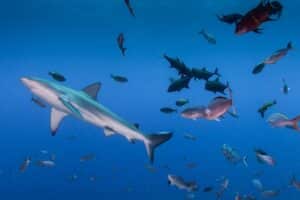 Reef sharks and coral reef health. The Global FinPrint project, the largest survey of reef sharks ever conducted, used baited underwater cameras across more than 350 reefs worldwide to assess reef shark populations. The project’s landmark 2020 study found that reef sharks were undetectable on roughly 20 percent of the surveyed reefs, a sign of severe depletion in those locations, while nations with strong fishing regulations and enforced marine protected areas retained much healthier shark populations (MacNeil et al., 2020). Researchers involved in the project have noted that reef sharks play multiple roles beyond simple predation, including transporting nutrients between reef and open-water habitats, and that losing specific shark species likely removes ecological functions that are difficult to replace (Global FinPrint, n.d.).
Great Whites and seal populations. Perhaps the clearest recent illustration of top-down control comes from False Bay, South Africa. For years, False Bay was known as a global hotspot for Great White Shark activity around Seal Island, home to a large colony of Cape Fur Seals. Between 2015 and 2019, Great White Sharks largely abandoned the bay, driven out in part by Orcas that started targeting sharks as prey. Marine ecologist Neil Hammerschlag and colleagues, who had tracked shark presence in the area for two decades, documented what followed: without their primary predator, Cape Fur Seal and Sevengill Shark populations increased, while the smaller fish and sharks that Sevengills prey on declined in turn (Hammerschlag et al., 2025). A related study on the same system found that once Great White Sharks became scarce, Cape Fur Seals showed measurable physiological changes, their stress hormone levels dropped, and their behavior shifted, consistent with the loss of a fear response that had previously shaped how they used their habitat (Hammerschlag et al., 2022). Taken together, the two studies suggest that the mere presence of a top predator does more ecological work than most casual observers would expect.
Reef sharks and mesopredator release at Scott Reefs vs. Rowley Shoals. A 2017 study in Marine Ecology Progress Series demonstrates an example of mesopredator release. This is when a top predator is removed, mid-level predators are freed from both being eaten and from competing with the top predator for food. These midlevel predators expand sharply, often at the expense of overall diversity. Comparing two similar reef systems off Australia with very different shark abundance (Rowley Shoals: protected and shark-rich; Scott Reefs: shark-scarce), Barley, Meekan, and Meeuwig (2017) found that where sharks were depleted, mid-sized carnivorous fish that sharks would otherwise eat or compete with expanded sharply, with some size classes showing close to a 200 percent increase in biomass. Overall species diversity dropped across most trophic levels at the shark-poor reef. Because many reef sharks are “gape-limited” (able to eat only prey up to about a third of their own body length), this mechanism pinpoints why losing sharks reshapes a reef ecosystem.
Sharks Beyond Ecology: Cultural Importance
Sharks Across Pacific Traditions
Many Pacific and coastal Indigenous c ultures cast sharks not as threats but as ancestors, protectors, and guides, woven into oral histories built on generations of close observation rather than fear. In Hawaiian tradition, sharks, known as manō, are associated with ‘aumākua, ancestral guardian spirits believed to watch over their descendants; Kanaka Maoli (Indigenous Hawaiians) preserved detailed knowledge of shark behavior through chants and genealogies, including sayings linking sharks to seasonal cues (Gould, 2020), and some families still recognize a shark as their guardian today.
This framing of sharks as powerful kin rather than adversaries underlies traditional ecological knowledge across the Pacific. That knowledge, built over generations of fishing and observation, treats the health of shark populations as inseparable from the health of the ocean itself, and increasingly informs conservation efforts that pair traditional understanding with contemporary marine science.
The Cook Islands: Ina and the Shark
As the powerful story is told through the Cook Islands, Ina was betrothed to Tinirau, the god of the ocean, who lived on a floating island far across the sea. Unable to swim the distance herself and turned away by fish and birds too small to carry her, Ina finally found a shark willing to ferry her across, and set off before dawn with a bag of coconuts for the journey. When she grew thirsty and had no knife, the shark offered its dorsal fin so she could crack the coconut open. Later, needing to relieve herself, she did so on the shark without telling him. This angered him so much that the legend credits this moment with why shark meat is said to smell of urine. When her thirst returned and the shark refused her a second coconut out of lingering anger, Ina cracked it against his head instead, an act the legend credits with giving the hammerhead its distinctive shape. Enraged and in pain, the shark threw her into the sea, and she was ultimately rescued by Tekea the Great, king of all sharks, who carried her the rest of the way to Tinirau’s island (Mallam, n.d.).
The story’s importance is hard to overstate: it appears on the Cook Islands’ three-dollar note, one of the few Cook Islands banknotes still recognized as legal tender. Its shark is neither purely benevolent nor purely dangerous, but powerful and complex, a fitting representation for how sharks are understood across the wider Pacific.
References
Brown, J. S., Laundré, J. W., & Gurung, M. (1999). The ecology of fear: Optimal foraging, game theory, and trophic interactions. Journal of Mammalogy, 80(2), 385–399.
Global FinPrint. Findings. https://globalfinprint.org/findings/index.html
Puniwai, N. (2020). Pua ka Wiliwili, Nanahu ka Manō: Understanding Sharks in Hawaiian Culture. Human Biology 92(1), 11-17. https://muse.jhu.edu/article/772228.
Grubbs, R. D., Musick, J. A., Conrath, C. L., & Romine, J. G. (2016). Critical assessment and ramifications of a purported marine trophic cascade. Sci Rep 6. https://doi.org/10.1038/srep20970.
Hammerschlag, N., et al. (2022). Loss of an apex predator in the wild induces physiological and behavioural changes in prey. Biology Letters. https://doi.org/10.1098/rsbl.2021.0476
Barley, S. C., Meekan, M. G., & Meeuwig, J. J. (2017). Species diversity, abundance, biomass, size and trophic structure of fish on coral reefs in relation to shark abundance. Marine Ecology Progress Series, 565, 163–179. https://doi.org/10.3354/meps11981
Hammerschlag, N., et al. (2025). Evidence of cascading ecosystem effects following the loss of white sharks from False Bay, South Africa. Frontiers in Marine Science. 10.3389/fmars.2025.1530362.
Heithaus MR, Wirsing AJ, Dill LM. (2012) The ecological importance of intact top-predator populations: a synthesis of 15 years of research in a seagrass ecosystem. Marine & Freshwater Research 63, 1039–1050. https://doi.org/10.1071/MF12024
IUCN Shark Specialist Group. (n.d.). FAQs. https://www.iucnssg.org/faqs.html
Dulvy, N. K., et al. (2021). Overfishing drives over one-third of all sharks and rays toward a global extinction crisis. https://doi.org/10.1016/j.cub.2021.08.062.
MacNeil, M. A., Chapman, D. D., Heupel, M., et al. (2020). Global status and conservation potential of reef sharks. Nature, 583(7818), 801–806. https://doi.org/10.1038/s41586-020-2519-y.
Myers, R. A., Baum, J. K., Shepherd, T. D., Powe
rs, S. P., & Peterson, C. H. (2007). Cascading effects of the loss of apex predatory sharks from a coastal ocean. Science (New York, N.Y.), 315(5820), 1846–1850. https://doi.org/10.1126/science.1138657.
Pacoureau, N., Rigby, C. L., Kyne, et al (2021). Half a century of global decline in oceanic sharks and rays. Nature, 589(7843), 567–571. https://doi.org/10.1038/s41586-020-03173-9.
Mallam, P. (n.d.). Ina and the Shark (Cook Islands). https://www.fijianmermaid.com/ina-and-the-shark-cook-islands.html.