
Do you remember what made you afraid of sharks? Was it a movie or documentary? A social media post? Perhaps it was a news headline or a lifeguard evacuating a beach due to a shark sighting.
Fearing sharks is a narrative that we all grew up with. They are often portrayed as monsters in movies and TV shows, negative shark encounters are often amplified in the news, and we rarely hear anything positive about them. The constant unfavorable narratives fuel our fears of and anger toward sharks, and often the catchy, sensationalized, headlines are the only and/or first information we receive. Once this information is anchored in us, it is hard to unsee sharks as monsters worthy only of fear.
As a scuba diver, I’ve encountered sharks underwater but despite my adoration, they promptly swam away every time. As a beachgoer, I’m sure I’ve had countless other encounters with them that I will never know about because they never approached me and I never saw them. However, negative shark encounters do happen, and because we have been taught to expect every encounter with sharks to be negative, our first reaction to the presence of sharks is often fear or anger.
But consider that sharks, like all animals on Earth (including humans), are nuanced. There are over 500 species of sharks globally, and all of them adapted to their own distinct marine ecosystem. [1] Sharks are complicated predators that have evolved over 420 million years and have survived at least five extinctions. [2] Through their evolution sharks have become agile, adaptable, and deeply diverse species, with incredible evolutionary traits.
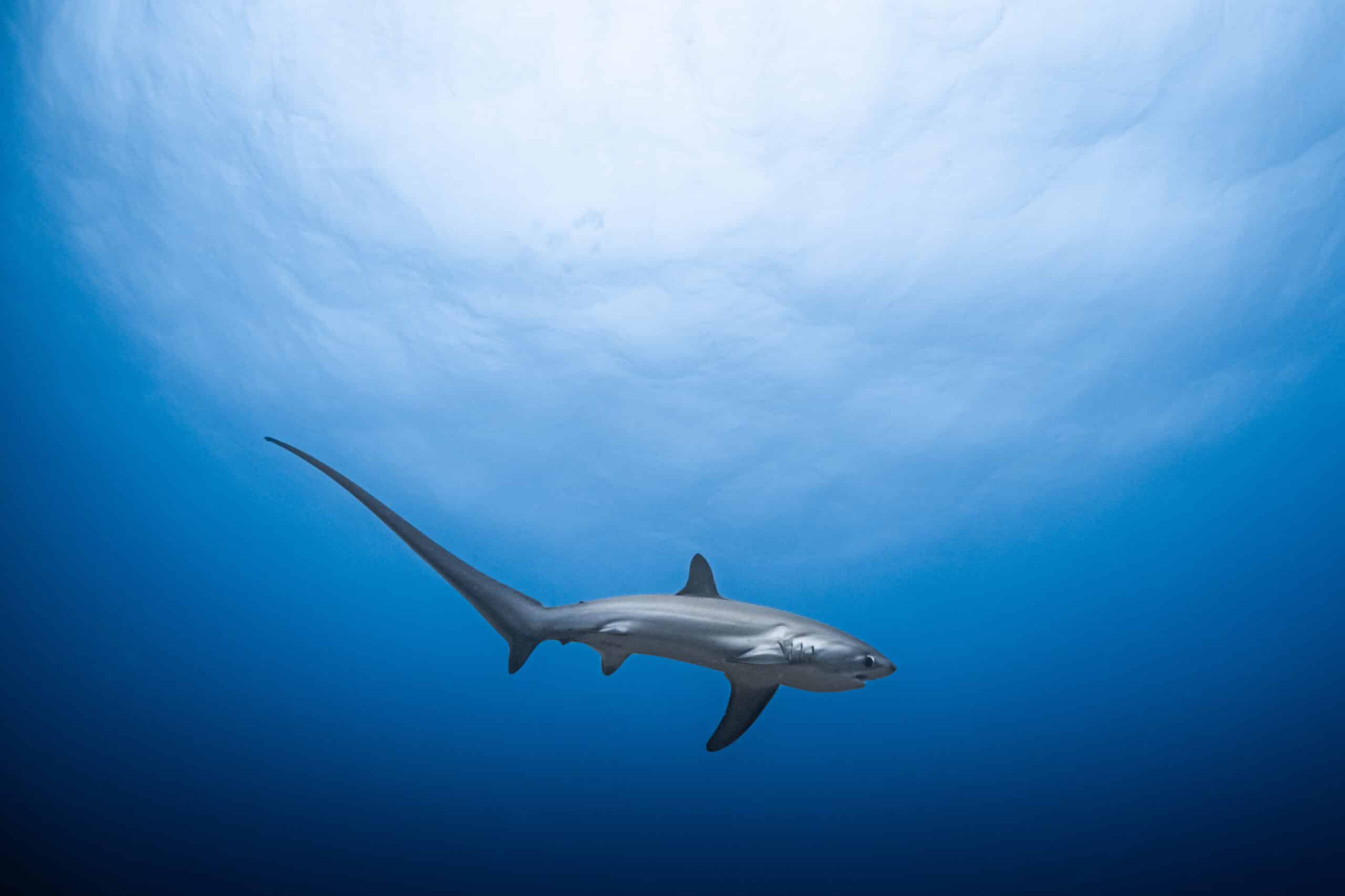
Take, for example, Thresher Sharks that have long tails used for stunning prey, the small Cookie Cutter Shark that lives below 3,000 feet and leaves small circle bites on its larger prey, or the Zebra Shark that likes to sleep on sand near a coral reef and feed on mollusks, crustaceans, and small bony fishes. Each species of sharks plays an important role in balancing marine food webs, keeping habitats healthy, and supporting coastal economies.
Yet, for decades, lack of relatability and perceived coldness has perpetuated the myth that sharks are monsters and something to be feared. Although sharks can be scary, can an increased knowledge and a shift in perspective help us to replace fear and anger with respect and curiosity? Can we lay the foundations to a new path of coexistence and tolerance that will ensure both safety for people and survival for sharks?
Instead of fear, we can choose curiosity and knowledge by learning more about sharks and diving beyond the catchy headlines. We can choose coexistence with sharks by giving them the space they need to adjust to a changing world. And we can choose to respect sharks by acknowledging that they are top predators that play critical roles in their ocean homes.
[1] Woods Hole Oceanographic Institute: Shark Facts
[2] Overfishing drives over one-third of all sharks and rays toward a global extinction crisis