
In an otherwise nondescript conference room – flowers lining the tables, delegates in tropical-professional garb, coffee flowing freely – sits a critical front line few people recognize. Alliances can shift over the course of days. Language is dissected word by word. Interventions are measured, strategic, and (mostly) polite.
Yet the decisions made in this room ripple far beyond it. They shape the future of food security for hundreds of millions of people.
The front lines in these fights over the world’s oceans are occupied by Regional Fisheries Management Organizations (RFMOs), which are international bodies created under the 1994 United Nations Fish Stocks Agreement to manage highly migratory and shared fish stocks. Most people have never heard of them. Yet their decisions influence what ends up on dinner plates across the globe. According to the FAO, aquatic foods provide 15 percent of animal proteins consumed worldwide. For 3.2 billion people, fish accounts for at least 20 percent of their daily animal protein intake. In Pacific Island nations, that share is far higher. Tragically, by the end of this decade, nearly 600 million people could be chronically undernourished. Whether that figure rises or falls depends in part on how we govern the oceans that supply one of the world’s most important sources of protein.
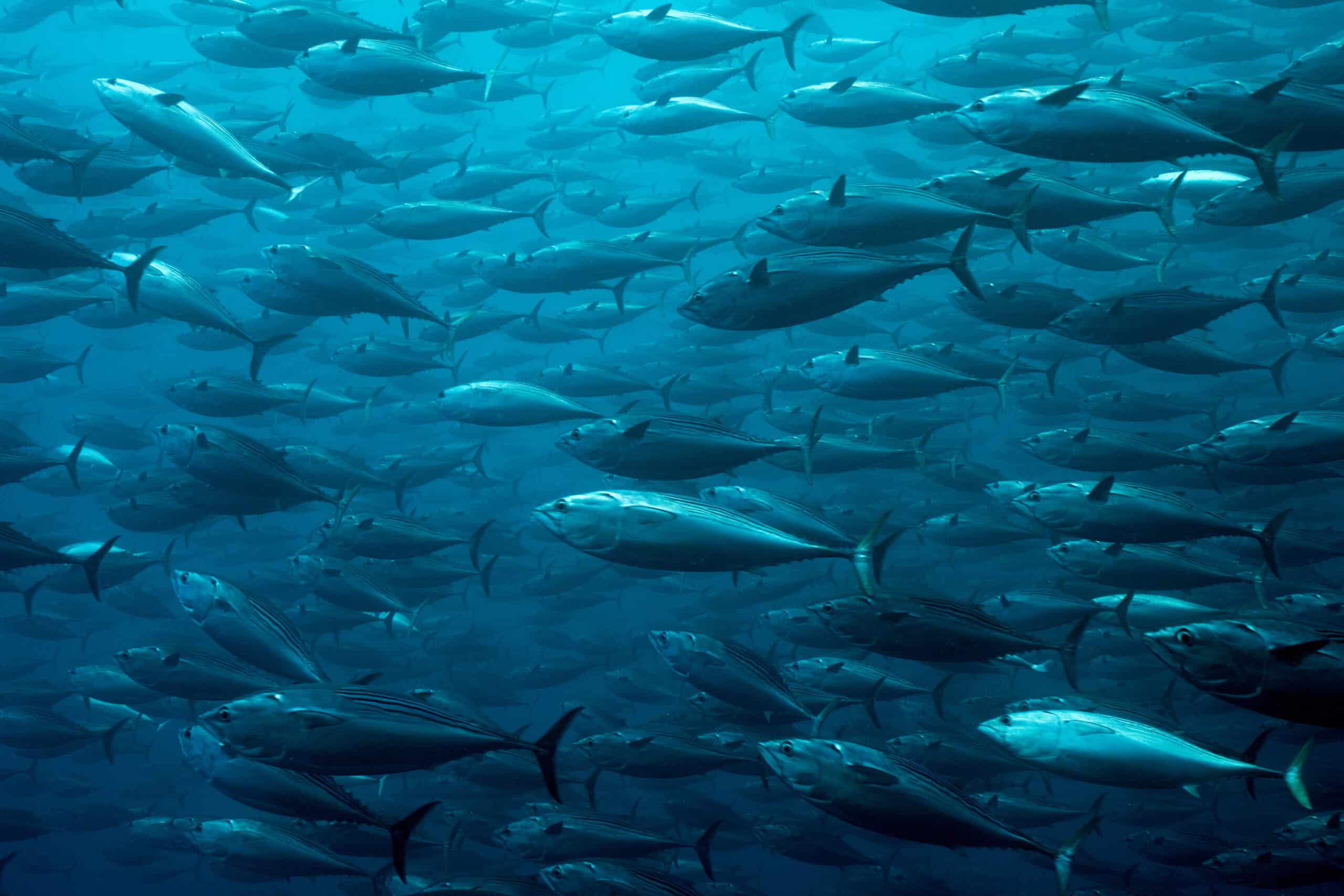
Tuna alone is a $40 billion industry and one of the world’s most traded sources of wild protein. The Western and Central Pacific Fisheries Commission (WCPFC) – where Sharks Pacific engages directly – manages the largest tuna fishery on the planet. For many Pacific Island nations, tuna is not only food. It is economic lifeblood, public revenue, and long-term stability; and the species that share these waters, especially sharks, carry cultural and spiritual significance that no stock assessment can fully capture. But food security is not just about how much fish is caught and sold.
Food security is about whether fish populations remain healthy—now, and for decades to come. It is about whether transshipment at sea hides illegal fishing and forced labor. It is about whether bycatch mitigation protects sharks and other vulnerable species that sustain ocean ecosystems. And it is about whether compliance and enforcement mechanisms are strong enough to ensure rules are followed, not merely adopted.
Sharks and rays are not peripheral to these questions: they are central to it. As apex predators, they regulate the food webs that keep commercially valuable fisheries productive. Yet oceanic shark and ray populations have declined by more than 70 percent since 1970. This precipitous decline is driven almost entirely by overfishing, and three-quarters of oceanic species are now threatened with extinction. Depleted shark populations destabilize the ecosystems that coastal communities and nations depend on. Protecting them is integral to food security.
These are the very issues debated and decided during WCPFC meetings. Delegations from distant-water fishing powers such as China, Japan, the United States, and the European Union, sit alongside Pacific Island states whose economies depend on sustainable fisheries. Observers – including Sharks Pacific and other members of civil society – monitor, analyze, and advocate during these proceedings. Scientific Committees present stock assessments. Technical and Compliance Committees evaluate implementation gaps. Language is negotiated carefully because each word can affect enforcement, transparency, and accountability across an entire ocean basin.
Decision-making is deliberate and consensus based. Progress can be incremental, but incremental decisions accumulate. So can setbacks. Weak transshipment oversight today can undermine stock data tomorrow. Insufficient bycatch protection can destabilize ecosystems over time. In short, governance integrity determines whether marine food systems remain viable.
Sharks Pacific’s policy work sits squarely within this reality. By engaging directly in WCPFC negotiations, submitting formal proposals, and advocating for stronger transparency and meaningful accountability mechanisms, Sharks Pacific is helping safeguard not just sharks, but the broader credibility and sustainability of fisheries that feed millions. The conference room may look unremarkable. The debates may seem technical. But the stakes are high.
On the front lines of food security, the battle is for long-term sustainability, transparency, and accountability. Sharks Pacific is there, ensuring that what happens in those quiet rooms helps support a more stable, equitable, and enduring ocean food system.