
I have spent more than 25 years working on fisheries and ocean policy, and in September I attended two meetings that left me with very different feelings about it. One made me hopeful. The other made me tired in a way that is increasingly too familiar.
The first was the Seafood and Fisheries Emerging Technologies Conference (SAFET2026) in Cebu, Philippines, where more than 375 people from government, industry, NGOs and technology companies gathered under the theme From Innovation to Implementation. The second was the 22nd Technical and Compliance Committee (TCC22) of the Western and Central Pacific Fisheries Commission (WCPFC) in Pohnpei, Federated States of Micronesia. One of TCC22’s main tasks, in effect, was to decide whether to put a new deadline on something the Commission members promised to do long ago.
Cebu: It is no longer a question whether technology can or will do what we need it to.
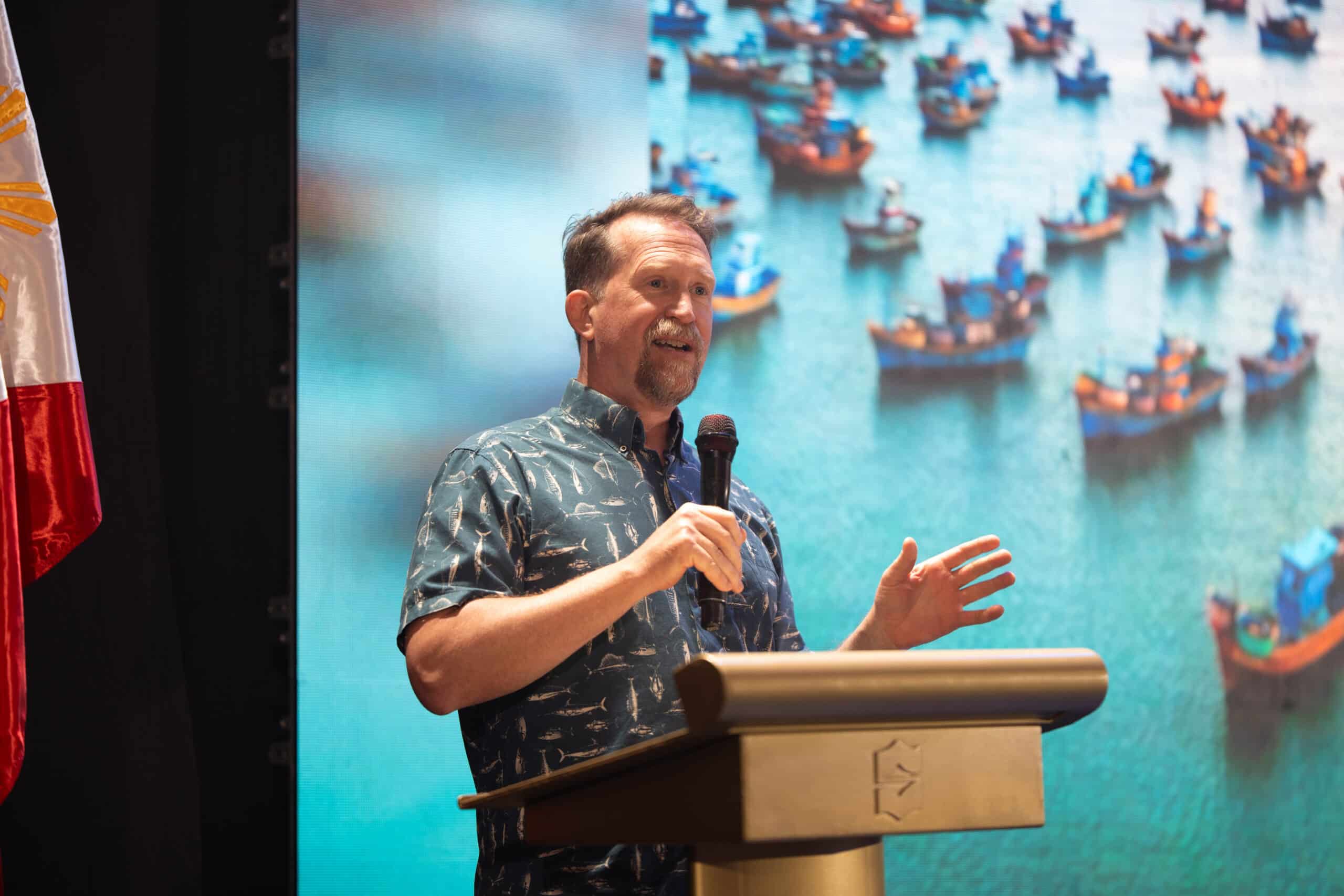
In Cebu I moderated an enforcement technologies panel and presented our work using rapid genetic analysis tools (aka “molecular monitoring”) for detecting and addressing potential illegal shark fishing. Around 200 shark and ray species are now listed under the Convention on the International Trade of Endangered Species (CITES), reflecting the dire state of many shark and ray species, yet processed and dried fins are easy to disguise or mislabel. A new genetic analysis platform developed by Dr. Diego Cardeñosa and colleagues can identify species in about two hours, for roughly $1.50 a sample, on a portable platform. That means any official at a port, a border crossing, or on a boarding vessel can do it. This technology was among many presented at SAFET2026 that demonstrated that the “possible” had suddenly become the “practical.”
What struck me most was the broader discussion not just within the session I was moderating, but across the entire conference agenda. Electronic monitoring, AI-driven video analytics, satellite connectivity, and port inspection tools were all being discussed by people who intended to deploy them, not just “consider” or “test” them. Among the technologies ready for deployment that I was most impressed by was one that received the prize for “Best New Technology Presentation.” A young researcher named Riki MacMillan from the University of Hawaii developed a computer vision tool that uses novel camera and lighting techniques to measure marine life, which represents a significant step forward if it can be paired with existing EM platforms. Watching the next generation build these tools is a big part of why I am still hopeful.
Pohnpei: The more things change, the more they stay the same.
I want to be fair to TCC22, because it did produce some modest progress in spite of a consensus process that is designed to only facilitate the bare minimum in change, especially if there is even the slightest potential of diminishing existing fishing industry profits. TCC22 recommended drafting new guidelines under a Conservation and Management Measure (effectively a regulation or rule) agreed in 2008 (CMM 2009-06) meant to create reporting obligations aimed at reducing or eliminating high seas transshipment over time, and that members that rely on transshipment update required plans for encouraging transshipment in port. This might sound like a mealy-mouthed and empty commitment, particularly given it is just re-iterating obligations that some countries were already obligated to meet…more than a decade ago…but it does represent a new line in the sand.
 Additionally, TCC22 recommended formalising an Electronic Monitoring Programme measure to advance application of EM (specifically camera) technology across the region as well as to aggressively advance electronic reporting of catch, effort and observer data. It is absurd to me that it has to be said in 2026, but no fisheries data should be submitted on paper these days. How many of you reading this still keep a paper check book or receive paper statements from your bank or credit card company?
TCC22 also advised on strengthening the management of marine pollution, particularly of abandoned, lost, and discarded fishing gear (ALDFG) and plastic waste generated onboard fishing vessels. This included a recommendation to consider the transfer of plastic waste to carrier vessels from longline vessels engaged in high seas transshipment that led to a feigned concern by some countries about the carrier vessels’ ability to receive such volumes of waste. If a much larger carrier vessel cannot receive and maintain waste from dozens of longline vessels over a period of weeks or months, how are the much smaller longline vessels supposed to maintain that waste over the 2 year period that high seas transshipment allows them to operate within? Where do you think that plastic waste that they currently do not bring to port ends up?
In any case, these are issues and steps I can build on, and I intend to. But I sat in that room as someone who has heard many of these arguments before, or specious arguments like them, and the frustration is hard to put down.
Transshipment
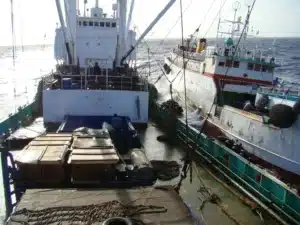 The transshipment “impracticability” guidelines, a framework under CMM 2009-06 to submit data that would prove an individual vessel faced a genuine economic hardship or significant change in historic operation, were meant to be adopted by 2012. Discussions were suspended in 2016 after four countries refused to allow the guidelines to progress under consensus knowing full well that it would result in more transparency, accountability, and a reduction in high seas transshipment…I’ll let you guess which four countries have historically withheld consensus to favour continued high seas transshipment. In this year’s TCC22 recommendation, those same four countries opposed any deadline or date for a draft to come back for consideration next year, clearly hoping to kick the can down the road for at least another year by weaponizing the consensus process once again. Meanwhile, an analysis conducted by Starboard Maritime Intelligence and the Republic of the Marshall Islands Marine Resources Authority (and supported by Sharks Pacific) used satellite-derived tracking data to identify 1,644 high-seas transshipment events between May 2020 and March 2026. It found that 41% fail a basic, but valid, distance-based impracticability test and that nothing has shifted towards port use in six years, which is wholly inconsistent with commitments under CMM 2009-06. The analysis also found no significant link between fuel price and where transshipment occurs, so the economic hardship argument further leaves no mark in the data. Consider also that this was an analysis that those countries that rely most on high seas transshipment were supposed to do independently for the last 18 years, but have failed to, forcing others, like us, to do that analysis for them. So, while an exemption designed to be limited and declining over time has become the default, no one is asked to justify it or certainly held accountable for not doing so.
When people fight that hard against being observed and, ultimately, held accountable, it is worth asking why.
Observer Coverage
Since 2007, countries have been required to meet a 5% observer coverage target, which research has shown to be woefully inadequate from the outset. The WCPFC’s own Scientific Committee has said it is not enough and recommended at least 10% of longline effort. Sharks Pacific called for a binding timetable and a progress report to be submitted to TCC23 next year, and yet no observer coverage decision was recorded because the same four countries opposed even mentioning a proposed increase in the meeting record. In more than 14 years of this process, I have never seen opposition to any issue as animated as it was for a simple proposal to increase longline observer coverage this year, including a point of order raised by one country just as the floor was offered to Sharks Pacific in an apparent effort to “run out the clock.” When people fight that hard against being observed and, ultimately, held accountable, it is worth asking why.
Shark Data
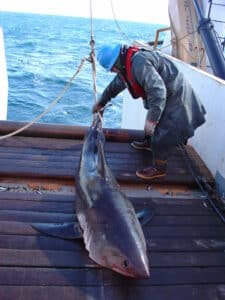 TCC22 interpreted existing regulations regarding the general reporting of discards to only “encourage” reporting for many bycatch species without a specific obligation in a separate rule. This might be adequate for some sharks designated as “key shark species,” but other species, such as Tiger and Dusky Sharks, will remain in a data shadow because the regulations, as interpreted, will still allow it. I guess the “good news” is that many countries and their fisheries observers already voluntarily collect and submit this data. The “bad news” is that some countries will simply see this interpretation as authorization to stop collecting and submitting this data altogether. The real solution, of course, is to make reporting all catch or bycatch discards, regardless of species, mandatory.
I could tell you I was surprised by these outcomes, but after 25 years I am not. The names and meeting rooms change, but the arguments about whether those who take from the ocean should be held to account for what they take are the same ones I witnessed when I started. Moreover, the ocean belongs to all of us, yet every year an increasing burden of proof and effort is placed on the people trying to protect it rather than those that seek to profit from its exploitation, which turns the concepts of conservation and sustainability on their heads.
Where principle and conscience fails to motivate fishing behaviour at the waterline, market access and money certainly will.
Where hope actually comes from
If I had only attended Pohnpei, I might sound more disparaging than I mean to. The reason I don’t is that the thing I spent a week in Cebu looking at has changed the terms of the debate.
Satellite tracking represents the clearest example. For decades, vessel location and, particularly, high-seas transshipment was an exemption that, historically, nobody could see into, which meant nobody could challenge it. The recent Starboard Maritime logistics analysis shows that this is no longer true. The behaviour is documented at fleet scale, and the claims can now be checked against the record. This methodology could be strengthened through required transparency of what is currently considered proprietary location data collected through Vessel Monitoring Systems (VMS) and I explain further why there is really no good reason to keep that data confidential in another article I wrote several years ago for the Mercatus Centre.
 Electronic monitoring and AI work the same way for observer coverage. Historically, countries responsible for longline vessels claimed that human observers simply could not be deployed on vessels because it was logistically too difficult and, even if it wasn’t, it was too expensive to place them on a vessel at any level greater than 5%. Technology has largely cut the legs from underneath that argument because cameras have gotten more powerful, compact, and inexpensive over time and are now able to do many of the tasks only human observers could do. Moreover, cameras don’t have to be paid, fed, housed, or flown to a remote port to meet a vessel at a high cost. These fisheries observation costs have especially been curtailed with new developments in edge computing and satellite data transmission. Never mind raising coverage to 10% or even 20%, new cameras and algorithms have brought the application of 100% observer coverage into the realm of possibility as demonstrated by existing programs in Australia and New Zealand. While there may still be concerns regarding whether data collected through these technologies remains independent and actually reaches the people responsible for compliance, it has largely changed the discussion about accountability.
Lastly, a $1.50 species test puts into an inspector’s hands what once required millions of dollars of equipment in a three story laboratory at a cost of thousands of dollars per sample. Fishermen that have counted on fisheries enforcement officers not having the time, energy, or tools to prove that loose shark fins aren’t what they say they are will soon find themselves explaining why they possess parts from endangered sharks that they are not supposed to catch, much less retain and sell.
There is something else I find hopeful. These tools don’t only serve regulators. They make it possible for all of us, including consumers, communities, journalists and the people who live beside the sea, to know more about where our seafood comes from and what it costs the ocean. People can’t make better choices without that information, and for most of my career it simply didn’t exist. These new technologies, such as those collectively incorporated into The Outlaw Ocean’s “Bait to Plate” Platform, are making that information increasingly available and accessible. Where principle and conscience fails to motivate fishing behaviour at the waterline, market access and money certainly will.
Technology is a viable solution only when there is enough political and institutional will to implement it in service of a solution people have accepted.
Technology is only as good as the will behind it
I want to be careful here, because I have watched good ideas fail too many times before. Technology in isolation does not result in a solution or hold anyone to account. A satellite can show us where and when high seas transshipment occurs, but it cannot make a regulatory authority adopt a rule to make the practice more transparent and accountable. A camera on a vessel can record a longline haul, but it cannot make anyone review the footage, much less prosecute a violation based on that evidence. A species test can identify an illegal shark fin, but only an authority willing to act can keep it out of trade or punish the violation.
Technology is a viable solution only when there is enough political and institutional will to implement it in service of a solution people have accepted. In this case, it means a defined standard for the transparent regulation of high seas transshipment (if not an absolute ban, which represents the simplest solution), a meaningful observer coverage target with a deadline on it, and a reporting requirement that applies to every species fishing vessels bring on board. Without that agreement, the tools will just give us an ever more detailed record of the problem. With it, those tools translate to actual enforcement and a genuine, reality-based solution.
WCPFC23 is the next chance to show the difference. Resolving the high seas transshipment problem can be given substance and a deadline. The Electronic Monitoring Programme can be designed with observer coverage targets built in alongside an associated target implementation schedule. Discard reporting can be made binding. None of it needs a new invention. It needs the WCPFC and all of its members to decide it wants the answer the technology is already giving us.
I’ve been doing this long enough to know how easily that can slip. And I acknowledge how politically fraught the task can be, having frequently noted that, “You can lead a horse to water and even shove their muzzle in the trough, but sometimes that horse would rather drown or die of thirst before they take a drink.” I’ve also been doing this long enough to know that, for the first time, the excuses are rapidly running out thanks to technology advancement.