
From 1–5 December 2025, the tuna fisheries world converged on Manila, Philippines, for the 22nd Regular Session of the Western and Central Pacific Fisheries Commission (WCPFC22). Sharks Pacific, represented by Bubba Cook, Jess Cramp, and Vinay Udyawer, joined colleagues from Pacific Island governments, fishing industry leaders, NGOs, and distant-water fishing nations to advocate for science-based management, transparency, and effective implementation of the Commission’s Conservation and Management Measures.
WCPFC22 is where political positioning meets practical action. Decisions taken in Manila this December will literally shape the future of our oceans as well as the livelihoods and security of coastal communities across the Pacific. This year, WCPFC22 made several important decisions related to how we manage our tuna fisheries, high-seas transshipment, compliance obligations, and ecosystem protections.
Securing a Science-Based Future for South Pacific Albacore
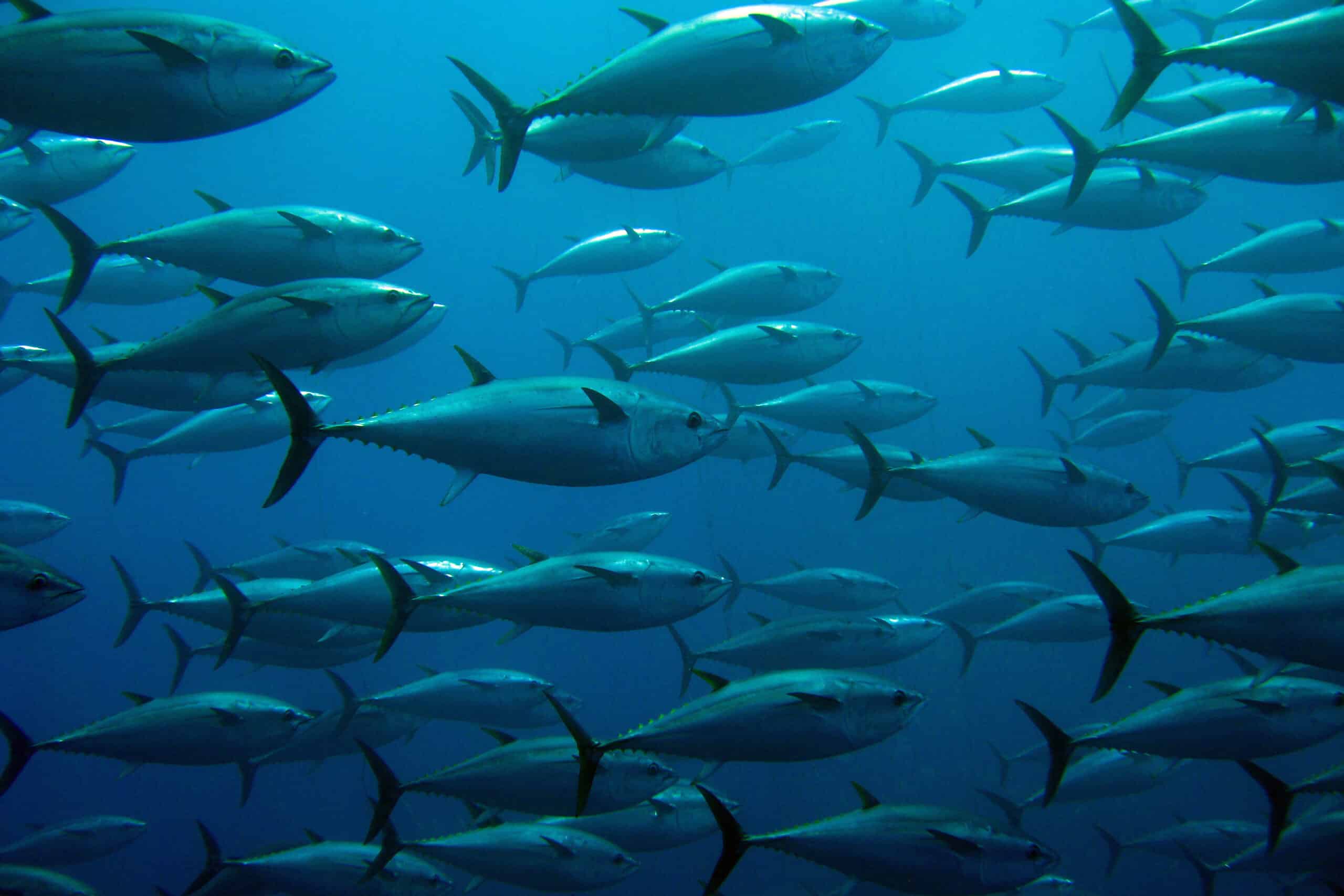
Arguably the defining achievement of WCPFC22 was the adoption of a first-ever Management Procedure (MP) for South Pacific albacore tuna. After decades of fishing without long-term, rules-based control on South Pacific albacore, WCPFC members finally agreed to a structured, science-driven approach to manage this economically and culturally vital fishery.
This outcome reflects sustained leadership by members of the Pacific Islands Forum Fisheries Agency (FFA) and a recognition that unmanaged volatility in this fishery undermines both sustainability and market confidence. The adopted MP ties allowable catch levels to the stock’s biological condition, introducing predictability and credibility to a fishery that underpins domestic food security and economic opportunity in Fiji, French Polynesia, American Samoa, Tonga, Vanuatu, and beyond.
This step was also important to sharks and rays across the region. With the introduction of more robust effort and catch controls in the South Pacific albacore fishery, in addition to the prior adoption of an MP for skipjack tuna, this means a commensurate level of increase in monitoring and enforcement of other fishing activity such as that related to sharks and rays. Additionally, as the various tuna stocks secure greater granularity of management through harvest strategy management like that applied to the South Pacific albacore stock, it lays the foundation for similar actions to be taken for various elasmobranch stocks as well.
Transshipment Reform Deferred, Advocacy Continues
One of the most contentious issues heading into Manila was high-seas transshipment reform. Longline transshipment on the high seas continues to pose transparency, traceability, and enforcement challenges, and calls from Pacific Island delegates, which were echoed by Sharks Pacific, for stronger rules and in-port transshipment requirements were loud and clear.
Despite this pressure, members could not reach agreement on even the most modest reforms to the existing transshipment measure, effectively deferring meaningful change for at least another year. While disappointing, this outcome provides additional runway for advocacy, research, and coalition-building through 2026, including continuing to elevate and shine a light on the risks of high-seas transshipment as a vector for illegal, unreported, and unregulated (IUU) fishing as well as human rights and labour abuses.
Sharks Pacific was active in interventions and side discussions on this topic, emphasising that true transparency in catch reporting and chain-of-custody data is foundational to both compliance and ecosystem protections. The inability of WCPFC22 this year to modernise its transshipment regime will be a top advocacy priority going into the intersessional period and WCPFC23.
Compliance and Transparency: Hard Won, But (Incremental) Progress Made
WCPFC22 also made modest advancements on monitoring, reporting, and accountability requirements. While not headline-grabbing, these reforms matter because they help ensure that science and policy translate into real-world results on the water and in port.
Among the incremental wins were commitments to enhanced monitoring protocols and strengthened implementation of existing requirements, including better use of electronic data streams and observer information to support enforcement. This aligns with repeated calls laid out by Sharks Pacific to highlight long-standing gaps in monitoring and compliance, such as deficiencies resulting from low fisheries observer coverage on longline and transshipment vessels that serve to deter IUU fishing.
Sharks Pacific’s interventions at the meeting pressed for transparency, consistency in reporting obligations across fleets, and affirmation that compliance must be verifiable and transparent, especially where vulnerable species, non-target catch, and ecosystem impacts intersect with core management measures. This sustained engagement by Sharks Pacific throughout the year and at WCPFC22 helped result in two key outcomes at WCPFC22: (1) tasking the Regional Observer Program to assess and identify potential enhancements needed to improve the accuracy and consistency of observer data on shark species identification and reporting; and (2) voluntary regional guides to enhance the effectiveness of high seas boarding and inspection (HSBI) activities, including the HSBI DNA Sampling Guide and the HSBI Collection and Dissemination of Photographic and Video Evidence Guide, which represent significant advances in MCS capability that establish minimum standards for evidence collection, chain of custody procedures, and reporting protocols that support robust enforcement actions against IUU fishing.
These outcomes, while seemingly modest and small, lay the important groundwork for developing and advancing procedures and technologies that will unquestionably improve outcomes across the Pacific for shark and ray populations.
Beyond Tuna: Ecosystem Protections and Bycatch Mitigation
While albacore dominated the discussion, WCPFC22 also delivered some progress on broader ecosystem issues. They adopted further measures to improve bycatch mitigation, particularly for seabirds, a concern underscored by both scientific advice and Pacific Island country priorities, but that outcome was not as strong as it could be due to political trade-offs negotiated for other national priorities of some countries. Although WCPFC22 did not adopt specific substantive reforms for sharks and rays at this meeting, our interventions contributed to growing recognition of ongoing finning activity and the need for better science as well as clearer and more enforceable bycatch mitigation measures. Nonetheless, a couple of minor procedural amendments were made to the existing shark conservation measure and compliance process that should increase transparency in reporting potential shark finning activity.
Sharks Pacific also strongly supported Canada’s proposal aimed at strengthening provisions related to abandoned, lost, and discarded fishing gear (ALDFG), plastics, e-waste, and other pollution from fishing vessels. We delivered a strong intervention commending Canada’s leadership and emphasizing that marine pollution must be recognized as a core fisheries management issue and highlighted that ALDFG continues to kill sharks, turtles, seabirds, and other vulnerable species long after vessels have departed, directly undermining the ecosystems that sustain WCPFC fisheries.
These outcomes, while often incremental, demonstrate that the Commission is capable of balancing core fisheries management decisions with attention to broader ecological impacts — a necessary approach if WCPFC is to meet its conservation mandate in full.
Looking Forward
WCPFC22 in Manila delivered a significant fisheries management outcome with the first binding, science-based management procedure for South Pacific albacore. However, that achievement represents just one issue among the hours of negotiation, technical exchange, and coalition-building both before and during the meeting. This means that the unfinished business on transshipment reform, compliance transparency, and bycatch mitigation will shape our work through 2026 and beyond.
For Sharks Pacific the message is clear: the momentum might be real, but vigilance is essential. Progress in Manila was substantive where it happened, but where agreement was deferred it must galvanise us, not discourage us. From the Pacific’s village fishers to global markets, what the WCPFC decides matters for our oceans, for sharks and rays…and for us. And as ever, our role is to ensure those decisions are grounded in science, accountability, equity, and transparency.
If progress in 2026 reflects the spirit of Manila, the Pacific’s tuna fisheries will be better managed, better monitored, and more sustainable, not just for tomorrow’s catch, but for tomorrow’s communities and our oceans. However, it will require the sustained presence and persistence of organisations like Sharks Pacific to ensure that momentum is maintained.